Companies House Filing Deadline Penalties
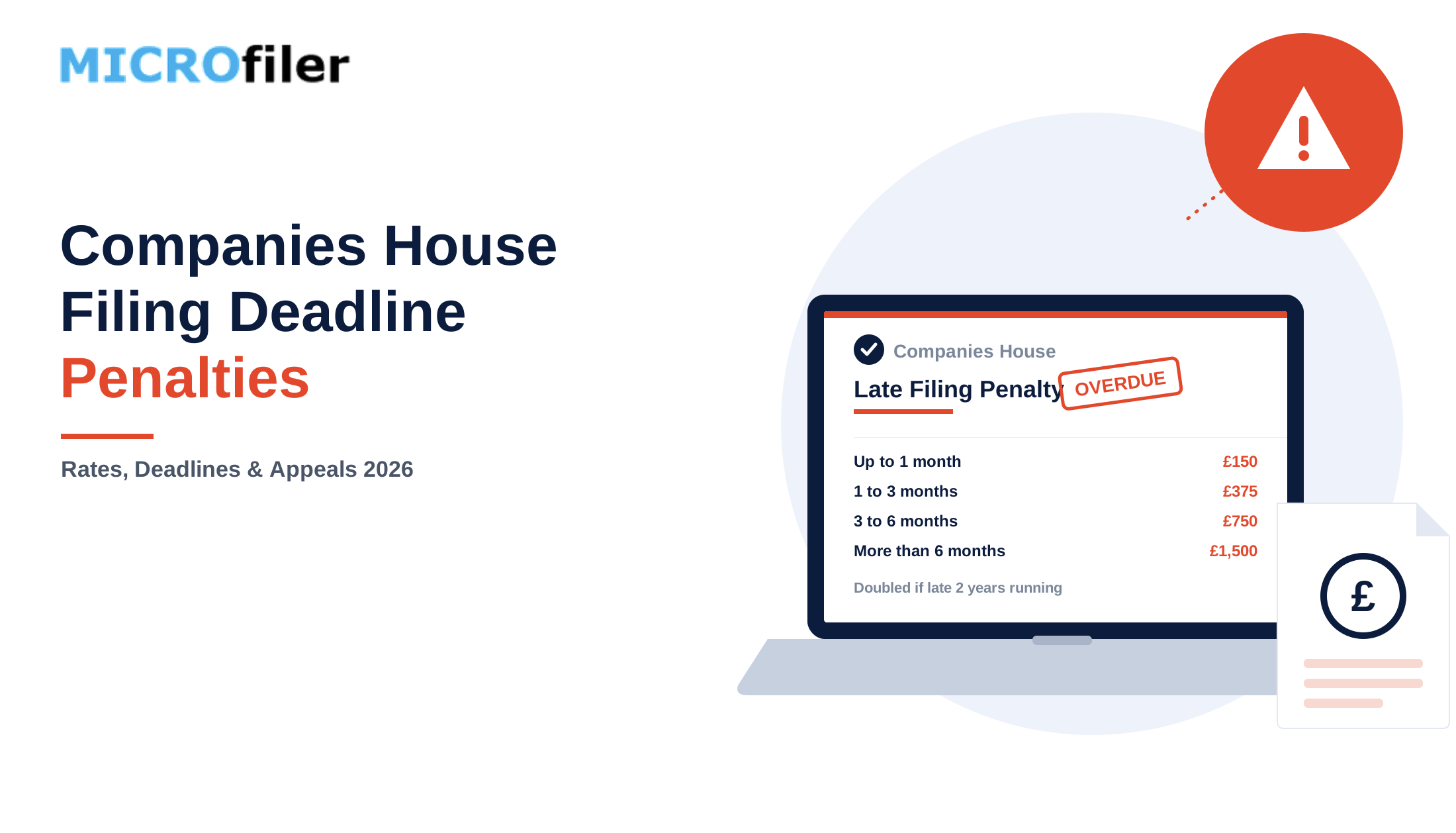
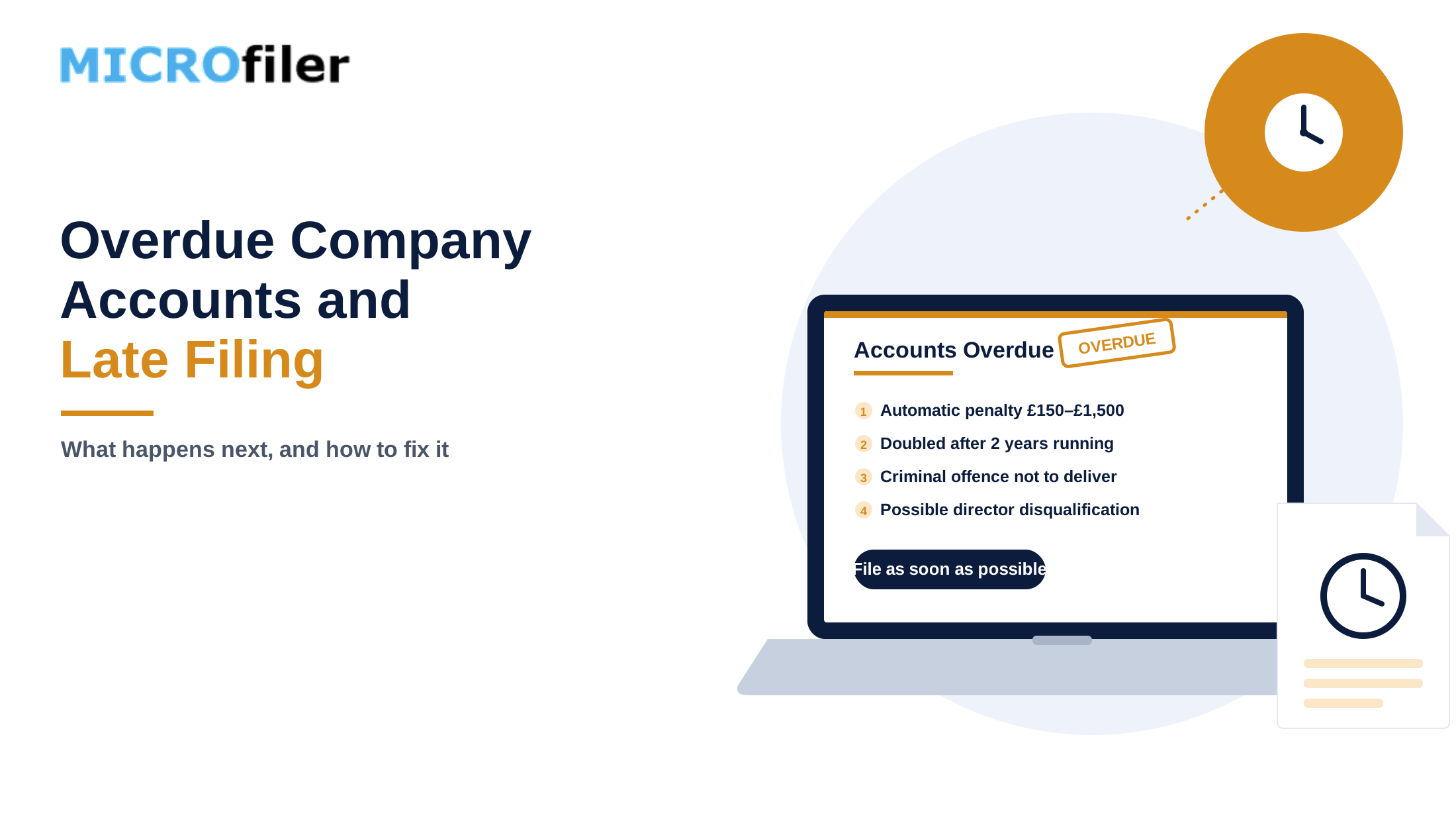
Missing a Companies House filing deadline can result in an automatic penalty. For a private limited company, the late filing penalty for annual accounts ranges from £150 to £1,500, depending on how late the accounts reach Companies House. If accounts are late for two consecutive financial years, the penalty is doubled.
The important point is that the penalty applies to late annual accounts. It is separate from Corporation Tax penalties imposed by HMRC and from the consequences of failing to file a confirmation statement.
For most private companies, subsequent annual accounts are due 9 months after the end of the company's accounting reference period. The directors remain responsible for ensuring the accounts reach Companies House in the correct format by the deadline.
This guide explains the current Companies House filing deadlines, penalty bands, what happens when accounts are filed late, when an appeal may succeed, and what directors can do to avoid the penalty.
For a private limited company or LLP, the current late filing penalties are:
| Late Filing Duration | Private Company / LLP | Public Company |
|---|---|---|
| Not more than 1 month | £150 | £750 |
| More than 1 month but not more than 3 months | £375 | £1,500 |
| More than 3 months but not more than 6 months | £750 | £3,000 |
| More than 6 months | £1,500 | £7,500 |
These are the statutory penalty bands set out in Companies House late filing penalty guidance.
The penalty is based on how late Companies House receives the accounts, rather than simply when you start preparing or submitting them. This distinction matters because an account that is submitted but rejected may still need to be corrected and accepted before the deadline.
When are Companies House accounts due?
The filing deadline depends on whether the accounts are the company's first accounts or subsequent annual accounts.
For a private company filing subsequent accounts, the normal deadline is 9 months after the end of its accounting reference period. Public companies normally have 6 months.
For example, if a private company's accounting reference date is 31 December, its annual accounts would normally need to reach Companies House by 30 September of the following year.
The deadline is not the same as the Corporation Tax filing deadline. A company can therefore have several different dates to track:
• Companies House annual accounts deadline
• Corporation Tax payment deadline
• CT600 filing deadline
• Confirmation statement deadline
• VAT deadlines, if registered
• PAYE deadlines, if applicable
• Directors' personal Self Assessment deadlines, where applicable
These obligations are separate. Filing accounts with Companies House does not automatically satisfy the company's Corporation Tax filing obligations.
What is the deadline for first company accounts?
First accounts follow different rules. If the first accounts cover a period of more than 12 months, a private company generally has 21 months from incorporation or 3 months from its accounting reference date, whichever is longer.
This is particularly important for newly incorporated companies because their first statutory accounts can cover more than 12 months.
The Companies House accounting period and the Corporation Tax accounting period can also differ. A Corporation Tax accounting period cannot exceed 12 months, so a newly incorporated company may need more than one Corporation Tax return even though its first statutory accounts cover a longer period.
How much is the Companies House late filing penalty?
Up to 1 month late: £150
If acceptable accounts reach Companies House no more than one month after the deadline, the penalty for a private company is £150.
More than 1 month but not more than 3 months late: £375
Once the delay moves beyond one month, the penalty increases to £375.
More than 3 months but not more than 6 months late: £750
A delay of more than three months increases the penalty to £750.
More than 6 months late: £1,500
If accounts are more than six months late, the penalty reaches £1,500 for a private company.
What if the company is late two years in a row?
The penalty is doubled when accounts are filed late in two successive financial years. This makes repeated late filing substantially more expensive than a single isolated mistake.
Are Companies House late filing penalties automatic?
Yes. If accounts are delivered after the deadline, Companies House automatically imposes a late filing penalty. The penalty applies to the company and is separate from any criminal proceedings that may arise from failure to file accounts.
Companies House sends a penalty notice showing information such as the filing deadline, the date the accounts were delivered and the penalty imposed.
There is no general grace period simply because the accounts were only a few days late. This is why filing on or before the deadline is safer than relying on a short delay being overlooked.
What happens if Companies House rejects your accounts?
A common mistake is to assume that submitting accounts before the deadline is enough. Companies House must receive acceptable accounts.
If accounts are rejected because they do not meet the filing requirements, they need to be corrected and delivered again. If the corrected accounts arrive after the filing deadline, the company can still receive a late filing penalty.
This is one reason why filing at the last minute creates unnecessary risk. Prepare and submit the accounts with enough time remaining to correct a problem if Companies House rejects the filing.
Can you appeal a Companies House late filing penalty?
Yes, but an appeal is not automatically accepted. Companies House says an appeal is generally successful only where exceptional or unexpected circumstances outside the company's control caused the late filing, or where Companies House itself made an error.
Reasons that are unlikely to succeed on their own
• The company was dormant.
• The company could not afford the penalty.
• The accountant was responsible for filing.
• The directors did not know about the deadline.
• These were the company's first accounts.
• The directors were overseas.
• Another director was responsible for preparing the accounts.
• The accounts were delayed or lost in the post.
If you appeal, provide evidence showing what happened and when. The current online appeal process asks for the company number, penalty reference, reason for the appeal and supporting documents.
The current requirements are set out in GOV.UK's guidance on appealing a Companies House late filing penalty.
If the appeal is unsuccessful, Companies House provides further review routes in appropriate cases. An appeal should therefore be based on genuine evidence rather than treated as a routine way to cancel a penalty.
Can you get an extension to the Companies House filing deadline?
In exceptional circumstances, you may be able to apply for more time before the filing deadline has passed. Companies House considers extensions where there is a special reason, but the circumstances must be exceptional.
This creates an important distinction: before the deadline, an extension may be possible if exceptional circumstances exist; after the deadline, the normal route is to file the outstanding accounts and, if appropriate, appeal the resulting penalty.
Are Companies House penalties different for dormant companies?
Being dormant does not remove the requirement to file annual accounts. Companies House requires companies to deliver accounts whether they are trading or non-trading.
If your company is dormant, the filing obligation still applies. Micro Filer's guide to dormant company accounts explains the filing process and the distinction between Companies House and HMRC dormancy.
A dormant company can therefore receive a late filing penalty if its accounts are delivered after the deadline. Dormancy is also not normally a successful reason for appealing a late filing penalty.
Are Companies House late filing penalties a criminal offence?
There are two separate issues to understand. First, the late filing penalty itself is a financial penalty imposed on the company. Second, failure to deliver accounts on time is also a criminal offence under company law.
Directors or designated LLP members can potentially face personal fines in the criminal courts. These consequences are separate from the late filing penalty.
Persistent non-compliance can also lead to enforcement action and, in appropriate circumstances, steps to strike the company off the register.
What happens if you do not pay the Companies House penalty?
If a late filing penalty remains unpaid, Companies House can take enforcement action. Its guidance explains that unpaid penalties can be passed to debt collection agencies and potentially pursued through the courts.
Companies House may also accept payment by instalments over a short period where a company has difficulty paying and makes a request explaining the circumstances.
The safest approach is therefore to deal with the penalty rather than allowing it to remain outstanding.
Does filing annual accounts prevent a Companies House penalty?
Only if the accounts reach Companies House by the applicable deadline and are acceptable.
| Example | Outcome |
|---|---|
| Accounts due 30 September; accepted 30 September | No late filing penalty |
| Accounts due 30 September; accepted 15 October | £150 penalty |
The key date is therefore the filing deadline and the date the acceptable accounts are actually delivered.
Companies House filing penalties vs HMRC penalties
One of the most common sources of confusion is treating Companies House and HMRC filings as the same obligation. They are not.
Companies House
Companies House receives the company's statutory annual accounts. For a private company, subsequent accounts are normally due 9 months after the accounting reference period, and late filing penalties range from £150 to £1,500.
HMRC
HMRC receives the Company's Tax Return, or CT600, and deals with Corporation Tax. The CT600 normally has a different filing deadline. Micro Filer's CT600 Company Tax Return guide covers the documents, deadlines and filing process.
A company can therefore be on time with Companies House but late with HMRC, on time with HMRC but late with Companies House, or late with both.
Paying Corporation Tax does not file the CT600, and filing accounts with Companies House does not satisfy the CT600 requirement.
How can you avoid Companies House late filing penalties?
The simplest solution is to treat the filing deadline as a date to work towards, rather than a date to start preparing for.
1. Check your actual Companies House deadline
Do not rely on memory. Check the company's filing deadline and accounting reference date.
2. Start the accounts early
Give yourself enough time to collect bookkeeping records, reconcile the bank account, resolve queries and prepare the statutory accounts.
3. Allow time for rejection or corrections
A filing made on the deadline leaves little room to fix a formatting or information problem.
4. Use calendar reminders
Set reminders several weeks or months before the deadline rather than relying on a single alert on the due date.
5. Do not assume your accountant has filed
An accountant can prepare and submit accounts on your behalf, but the director remains responsible for ensuring the accounts are delivered on time. Ask for confirmation that the accounts have actually been accepted.
6. File before the final day where possible
Early filing gives you more time to deal with rejection, missing information or technical problems.
A simple example of how the penalty escalates
Suppose a private company has accounts due on 30 September.
| Accounts received by Companies House | Result |
|---|---|
| 30 September | No late filing penalty |
| 15 October | £150 |
| 15 December | £375 |
| 15 February | £750 |
| 15 May | £1,500 |
The exact penalty depends on the applicable filing deadline and how long after that deadline the accounts are delivered. If the company is also late in the following financial year, the relevant penalty for the second consecutive late year can be doubled.
What should you do if your accounts are already late?
If your Companies House accounts are already overdue, do not wait for the penalty notice before taking action.
1. Check the company's actual filing deadline and accounting reference date.
2. Prepare the outstanding accounts using the correct accounting period and filing requirements.
3. File the accounts as soon as possible.
4. Check the penalty notice when it arrives and make sure it corresponds with the filing dates.
5. Consider an appeal only if you have genuine grounds supported by evidence.
Do not base an appeal simply on the fact that the company was dormant, the accountant was responsible, or the directors did not know about the deadline. Those reasons are specifically identified as unlikely to succeed.
Do micro-entity accounts change the late filing penalty?
Qualifying micro-entities can use simplified statutory accounts, but simplified accounts do not remove the Companies House filing deadline.
If your company qualifies as a micro-entity, Micro Filer's guide to micro-entity accounts explains the eligibility rules, filing requirements and the separate HMRC position.
The important point for penalties is that using a simpler accounts regime does not give a company extra time to file.
Frequently Asked Questions
What is the Companies House late filing penalty for a private company?
The penalty is £150 for accounts filed no more than one month late, £375 when more than one but no more than three months late, £750 when more than three but no more than six months late, and £1,500 when more than six months late.
Are Companies House penalties doubled?
Yes. The applicable late filing penalty is doubled if accounts are filed late in two successive financial years.
Can I appeal a Companies House late filing penalty?
Yes, but successful appeals generally require exceptional or unexpected circumstances outside your control, or a Companies House error. Simply relying on an accountant, being unable to afford the penalty or not knowing the deadline is unlikely to be enough.
Do dormant companies have to file accounts?
Yes. Dormant or non-trading companies still have Companies House filing obligations and can receive late filing penalties.
Are Companies House accounts and the CT600 the same filing?
No. Annual accounts are delivered to Companies House, while the CT600 is filed with HMRC. They are separate statutory obligations with different deadlines and penalty regimes.
Can Companies House give you more time to file?
An extension may be available in exceptional circumstances, but it should be applied for before the filing deadline has passed.
Is it the accountant's responsibility to file the accounts?
An accountant can prepare and submit accounts on your behalf, but the director remains responsible for ensuring the accounts are delivered within the required time.
What happens if Companies House rejects accounts submitted before the deadline?
The accounts need to be corrected and delivered again. If the acceptable corrected accounts arrive after the deadline, a late filing penalty can still apply.