How to File a CT600: Documents, Deadlines and Penalties
How to File a CT600 Company Tax Return
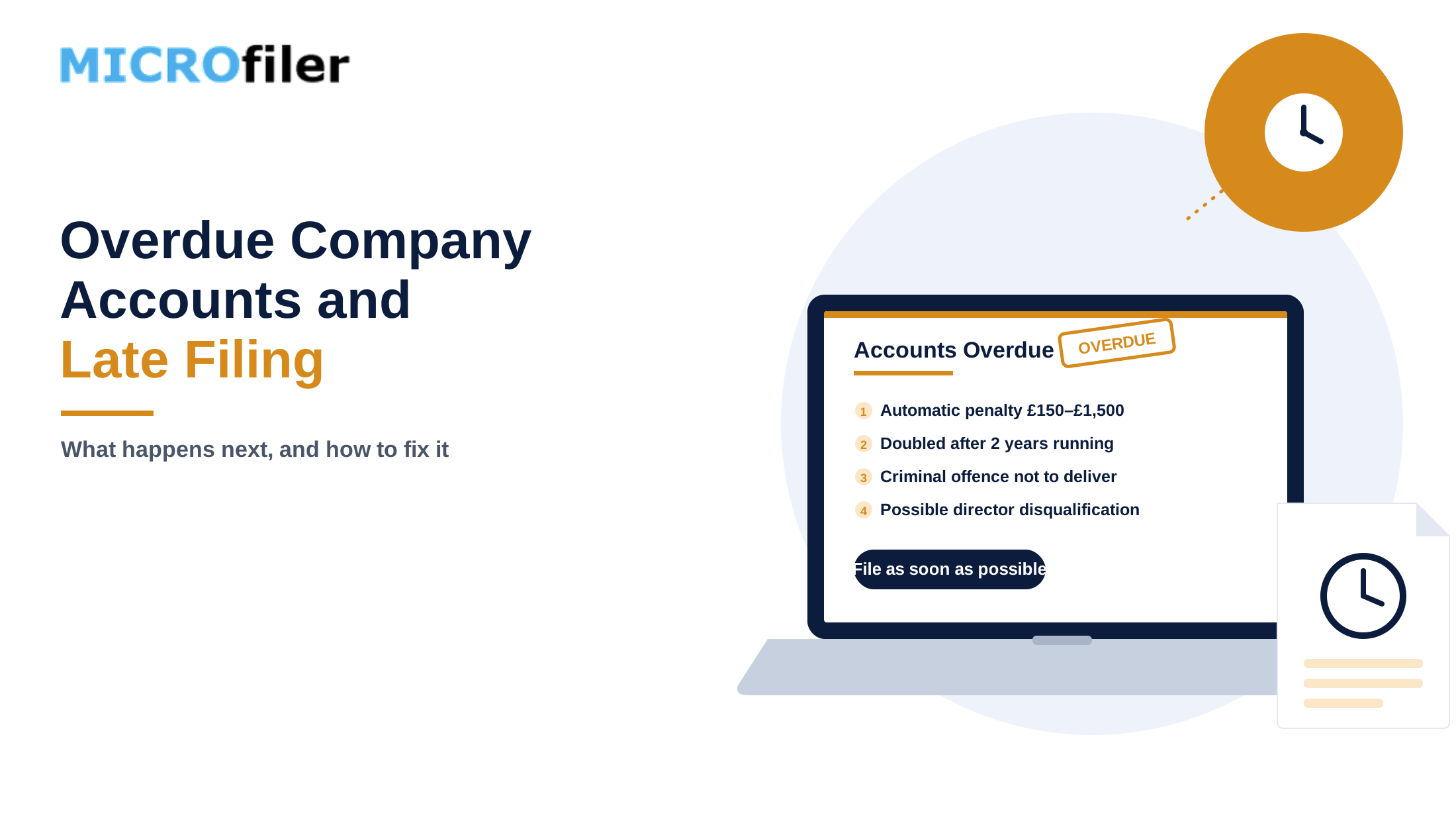
A CT600 is HM Revenue and Customs' Company Tax Return, the form every UK company or association uses to report its income, gains, reliefs, and Corporation Tax bill for an accounting period. It matters because filing it isn't optional: once a UK company starts trading, earning income, or otherwise operating, HMRC expects a Corporation Tax registration and, in due course, a CT600 for every accounting period, whether the company made money or not. Skip it, and HMRC charges automatic penalties from the day after the deadline, regardless of whether any tax is actually owed.
Filing a CT600 means preparing three things together, the CT600 form itself, your statutory accounts, and a tax computation, then submitting them through HMRC-recognised software or a chartered accountant. This guide walks through who's actually required to file, what you need to gather before you start, the filing steps themselves, and the deadlines and penalties that come with getting it wrong.
HMRC closed its free Company Accounts and Tax Online filing service on 31 March 2026. From 1 April 2026, you can no longer file a CT600 through HMRC's own website. You now need commercial software or an accountant who files on your behalf.
Key takeaways
- Filing is triggered by HMRC's "notice to deliver a Company Tax Return," issued automatically to active companies; clubs and associations can owe one too. Sole traders and partnerships file Self Assessment instead.
- Gather your UTR, company details, and finalised accounts before opening any filing software.
- A CT600 filing is three documents submitted together: the CT600 form, iXBRL accounts, and an iXBRL tax computation.
- New companies often file two CT600s in their first year, since the first accounting period usually exceeds 12 months.
- The filing deadline is 12 months after the accounting period ends; payment is due earlier, at 9 months and 1 day.
- You can amend a return within 12 months of the filing deadline.
Who Needs to File a CT600?
Your company or association must file a Company Tax Return once HMRC sends a "notice to deliver a Company Tax Return." You still have to file if you make a loss or have no Corporation Tax to pay. HMRC issues this notice automatically to companies it believes are active, so in practice any trading UK limited company files one every accounting period.
Two groups often assume they're exempt and aren't:
- Dormant companies that later receive a notice. Once HMRC issues that notice, you must file, even for a period with no activity at all.
- Clubs, societies, and other unincorporated associations. A sports club or voluntary group can owe Corporation Tax and a Company Tax Return too, even though it isn't a limited company. GOV.UK covers registration for these differently from standard limited companies.
One group that doesn't file a CT600 at all: sole traders and partnerships. They report profits through Self Assessment instead, not a Company Tax Return.
If HMRC has confirmed your company is dormant and hasn't issued a notice, you don't need to file. That confirmation is the trigger, not your own assumption that nothing happened.
What Documents and Information Do You Need?
Gather these before you open any filing software:
- Your Corporation Tax UTR. The 10-digit Unique Taxpayer Reference HMRC posted to your registered office when the company was set up for Corporation Tax.
- Company details. Registered name and Companies House number.
- Your accounting period dates. Normally the same 12 months as your company's financial year.
- Finalised year-end figures. Turnover, expenses, and profit, plus anything that needs adjusting for tax, such as depreciation, client entertainment, and capital purchases.
- Government Gateway credentials. Needed to access your business tax account, even when filing through commercial software.
- Filing software or an accountant. HMRC-recognised software that produces the CT600, computation, and iXBRL accounts, or an accountant who files on your behalf.
What's Included in a CT600 Filing?
A Company Tax Return is three documents, filed together, not one.
- The CT600 form. Company details, the accounting period, profits, reliefs, and the Corporation Tax calculation.
- Statutory accounts in iXBRL format. Your company's year-end accounts, tagged so HMRC's systems can read them automatically.
- A Corporation Tax computation. The working that turns your accounting profit into taxable profit, also filed in iXBRL.
Some returns also need supplementary pages. CT600A covers director's loans, for example. Most micro-entities and small companies file the core CT600 with no supplementary pages at all.
Filing with HMRC is separate from filing with Companies House. You still send annual accounts to Companies House, usually within 9 months of your accounting reference date, even though HMRC receives a version of those accounts alongside your CT600. GOV.UK sets out what a Company Tax Return must include in full.
How Do You File a CT600 Step by Step?
Step 1: Confirm your accounting period
Your Corporation Tax accounting period normally matches your financial year and can't exceed 12 months. If your first accounts cover more than that, see filing your first return below.
Step 2: Prepare your statutory accounts and tax computation
Most small companies prepare accounts under FRS 105 (micro-entities) or FRS 102 Section 1A (small companies). Build the computation by starting from accounting profit, adding back disallowable costs like depreciation and entertainment, deducting capital allowances, and applying any losses to reach taxable profit.
Step 3: Complete the CT600 form
Enter company details, accounting period dates, and the figures from your computation. Check that the accounting period on the CT600 matches your company's actual trading period, not just the statutory accounts period. Mismatched dates are one of the most common reasons a return gets queried.
Step 4: Submit online through commercial software
File the CT600, accounts, and computation together through HMRC-recognised software, or through an accountant using their own professional software. Paper filing still exists, but only with a reasonable excuse for not filing online, or when filing in Welsh with form WT1 attached.
Step 5: Pay any Corporation Tax due
Filing the return and paying the tax are separate actions with separate deadlines, and payment comes first. Pay through your business tax account using your UTR followed by "A" and the accounting period end date, for example 1234567890A260331.
A simple worked example: a company with £68,000 accounting profit, £4,000 added back for depreciation, and £6,000 deducted in capital allowances arrives at £66,000 taxable profit. That sits between £50,000 and £250,000, so marginal relief tapers the rate down from the 25% main rate to an effective rate in the low 20s rather than the full 19% or 25%.
Filing Your First Corporation Tax Return
New companies often hit one quirk. Your first accounts from Companies House usually cover more than 12 months, from incorporation to the end of the month a year later. A Corporation Tax accounting period can't exceed 12 months, so your first year typically needs two CT600s: one for the first 12 months of trading, and one for the remaining days up to your accounts date. Each is due 12 months after the end of the period it covers. After that first year, your accounting period and financial year normally line up, and you file one return per year. GOV.UK
When Is the CT600 Filing Deadline?
The CT600 is due 12 months after the end of your accounting period. A company with a year end of 31 March 2026 must file by 31 March 2027.
Corporation Tax itself is due earlier, 9 months and 1 day after the period end. The same company would pay by 1 January 2027, three months before the return is even due. Most companies calculate their tax bill and pay it before they get around to filing the CT600 that confirms the figure. Companies with taxable profits above £1.5 million pay in quarterly instalments instead of a single lump sum.
Current Corporation Tax rates are 19% on profits up to £50,000 and 25% above £250,000, with marginal relief tapering the rate for profits in between. GOV.UK publishes the current rates and thresholds if these change after this guide was last reviewed.
What Happens if You File a CT600 Late?
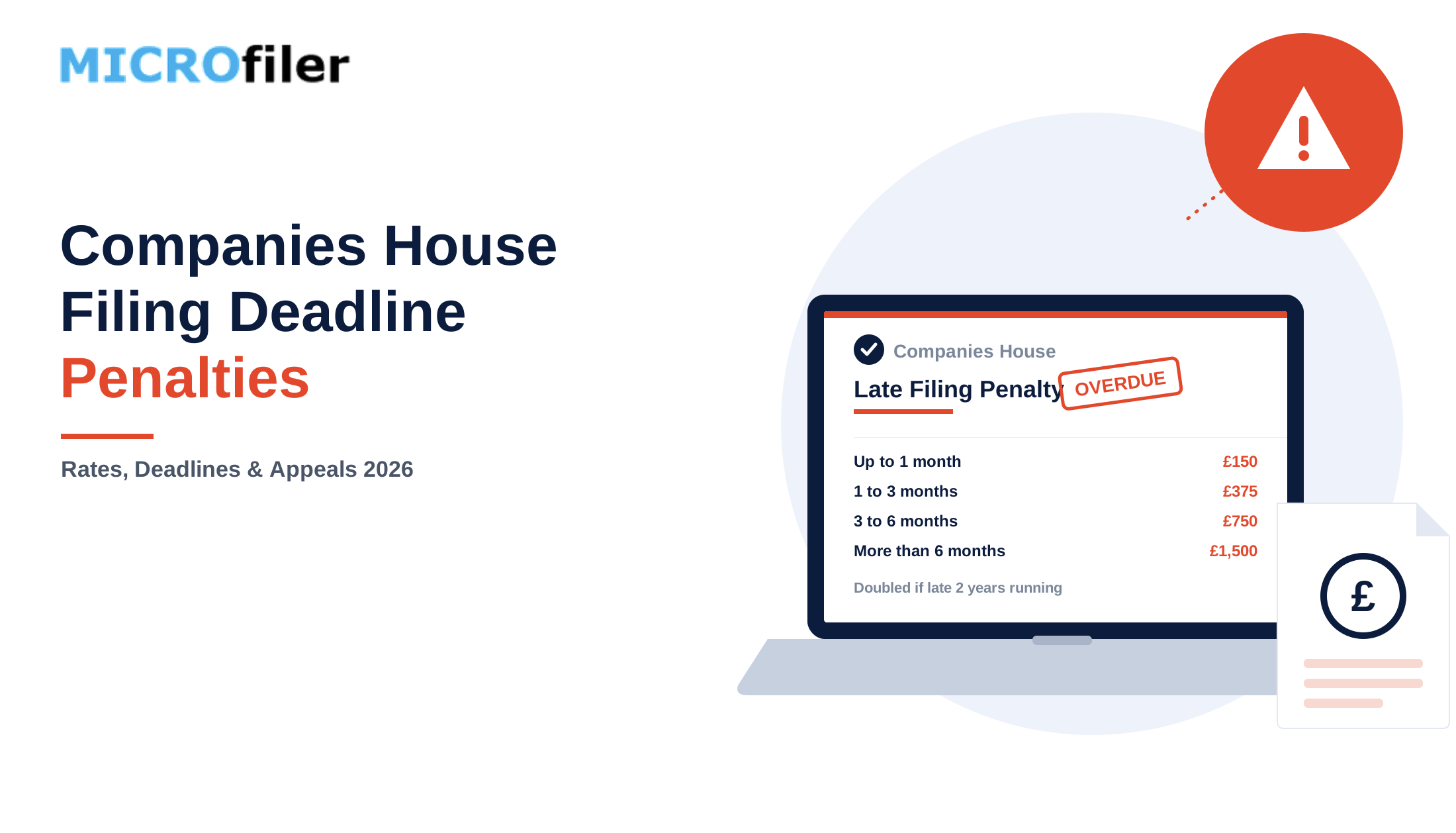
HMRC's penalties start the day after the deadline and apply whether or not you owe any tax.
- 1 day late: £200
- 3 months late: another £200 on top
- 6 months late: HMRC estimates your bill and adds a further 10% of the unpaid tax
- 12 months late: another 10% of unpaid tax on top of that
File late three times in a row and the fixed £200 penalties rise to £1,000 each time. If you're six months late, HMRC issues a "tax determination," its own estimate of what you owe, and you can't appeal it. You still have to pay the determined amount and file the return; HMRC recalculates the interest and penalties once it has the real figures. GOV.UK's penalty guidance has the full detail, including how to appeal if you have a reasonable excuse.
Do Dormant Companies Need to File a CT600?
Usually not, but the exceptions catch people out. A company genuinely dormant for Corporation Tax, meaning no trading and no income of any kind, including bank interest, doesn't need to file once HMRC has agreed it's dormant. You tell HMRC through your business tax account.
If HMRC has already sent a notice to deliver a Company Tax Return, you must file even if the company did nothing that period. That return is a normal CT600 with every figure at zero, known as a nil return. There's no separate nil-return form. GOV.UK explains dormant company rules in more depth.
Dormant for Corporation Tax and dormant for Companies House are two different tests. A company can meet one and not the other, so check both separately rather than assuming.
Can You Amend a CT600 After Filing?
Yes. You can amend a Company Tax Return within 12 months of the filing deadline, usually by resubmitting the corrected return through your filing software. If you spot an error after that window closes, contact HMRC directly. Overpaid tax can often still be reclaimed through an overpayment relief claim even once the amendment window has passed. GOV.UK confirms the 12-month window and what HMRC can do if it disagrees with your figures.
Can You File a CT600 for Free?
Not through HMRC anymore. Its free filing service closed on 31 March 2026. Some commercial software providers still offer free or low-cost filing for straightforward dormant or nil returns, but a trading company with real figures to compute is better served by paid software or an accountant who can check the numbers before they reach HMRC.
Common CT600 Questions
Do I need an accountant to file a CT600?
No. A director can file the company's own CT600 using HMRC-recognised software, provided the company's affairs are straightforward. Complex situations, such as R&D claims, group relief, or significant capital transactions, are worth professional review before filing.
How long does filing a CT600 take?
With finalised year-end figures, a straightforward small-company CT600 can be prepared and filed in well under an hour using guided software. Most of the work is having accurate accounts ready first.
What's the payment reference for Corporation Tax?
Your 10-digit UTR followed by "A" and the accounting period end date in YYMMDD format.
Does a loss-making company still need to file?
Yes. File on time even at a loss. Reported losses can be carried forward against future profits, but only if HMRC has a record of them.
Do I still need to file accounts with Companies House?
Yes. The CT600 and iXBRL accounts go to HMRC. Statutory accounts are filed separately with Companies House, normally 9 months after the financial year ends. GOV.UK covers first accounts and returns for new companies specifically.
This guide is based on official guidance from
GOV.UK, Companies House, and HMRC. Always verify current requirements before filing.