Micro-Entity Accounts for 2025/26 and 2026/27: Rules, Thresholds and Filing Requirements
5 August 2026
Micro-Entity Accounts for 2025/26 and 2026/27

What is a micro-entity?


Micro-entities are the smallest category of UK companies and benefit from simplified reporting. From accounting periods starting on or after 6 April 2025 the qualifying limits have increased, so more businesses will meet the test. To be classed as a micro-entity a company must satisfy at least two of the three tests during the year:


Annual turnover: up to £1,000,000 (previously £632,000).

Total assets on the balance sheet: up to £500,000 (previously £316,000).

Number of employees: 10 or fewer (unchanged).


The bigger increases in the turnover and balance sheet ceilings mean many firms that were once “small” may now qualify as micro-entities.


What micro-entity accounts contain?

Micro-entity accounts are intentionally brief and focus on fundamental financial facts. For the 2025/26 and 2026/27 reporting periods, the required elements are:


A: Balance sheet

  • Lists assets and liabilities.
  • Shows the company’s net position (assets less liabilities).
  • Must be signed by a director.


B: Profit and loss account

  • Summarises income and expenses for the year.
  • Reveals whether the company made a profit or a loss.


C: Accounting Policy & Notes to Accounts 


What micro-entities do not need to prepare

Compared with small and medium companies, the micro-entity regime removes several reporting requirements. Micro-entities are not required to produce:

  • A directors’ report (optional).
  • Extensive notes to the accounts.
  • A cash flow statement.
  • A statement of changes in equity.
  • A detailed narrative on business performance.


What You Don’t Need to Prepare

Unlike small or medium companies, micro-entities are not required to prepare:

  • A directors’ report (completely optional)
  • Detailed notes to the accounts
  • Cash flow statements
  • Statement of changes in equity
  • Comprehensive business performance analysis


Accounting Standards for Micro-Entities

Micro-entities must prepare their accounts using FRS 105 (Financial Reporting Standard for Micro-entities), which is part of the UKGAAP framework. This standard is specifically designed for the smallest companies and offers substantial simplification.


Key Features of FRS 105

Prescribed Format:

  • Balance sheet must follow the exact layout specified in the standard
  • No flexibility in how items are presented
  • Simplified categories compared to other accounting standards


Reduced Disclosure Requirements:

  • Minimal notes to accounts required
  • No requirement to disclose director remuneration details
  • Limited information about related party transactions
  • Simplified treatment of depreciation and amortisation


Practical Implementation:

  • Most accounting software includes FRS 105 templates
  • Professional accountants familiar with UK small company accounts can prepare these easily
  • The standard is designed to be straightforward even for non-accountants


Audit Exemption for Micro-Entities

Almost all micro-entities qualify for automatic audit exemption, which significantly reduces costs and administrative burden.


Audit Exemption Criteria

Your micro-entity is exempt from audit if it meets any of these conditions:

  1. Revenue up to £10.2 million (far above micro-entity threshold)
  2. Not a public company and not part of a group requiring audit
  3. Meets micro-entity criteria (which automatically qualifies you)


What You Need to Do

  • Even though exempt, you must:
  • Include a statement on your balance sheet confirming audit exemption
  • Both directors must sign this statement
  • Specify which exemption applies (micro-entity status)
  • Confirm the company qualifies for the exemption


Important Note: Under the delayed ECCTA 2023 reforms, this statement would become more detailed (“enhanced”), but current requirements remain unchanged.


Filing Micro-Entity Accounts: Current Rules and Pending Changes

What Applies Right Now (2025/26)

For companies filing accounts for the 2025/26 financial year, the existing rules remain in place:


Filing Options Available:

  • Submit accounts through Companies House WebFiling service
  • Use commercial accounting software that supports iXBRL
  • Send paper accounts by post (though this is becoming less common)


What You File:

  • Abridged balance sheet only (for public record)
  • The profit and loss account are prepared internally but not filed publicly under current rules
  • Optional directors’ report (if you choose to include one)


Timing:

  • Accounts must be filed within 9 months of your financial year-end
  • Late filing penalties apply if you miss this deadline


Major Changes from April 2028

All accounts filings made on or after 1 April 2028 must be filed by commercial software in inline extensible Business Reporting Language (iXBRL) format.

From this date, Companies house web and paper routes will be closed for accounts filings


What’s changing:

  • Micro-entities must file both balance sheet AND profit and loss account publicly
  • No option to file abridged accounts
  • Mandatory use of commercial software for all filings
  • Enhanced director’s statement on balance sheet for audit-exempt companies


What This Means for You:

You should continue following current rules but prepare for implementing new rules staring 2028/29


Common Questions About Micro-Entity Accounts

Can a Company Be Micro-Entity and Still Choose Small Company Accounts?

Yes. Qualifying as a micro-entity doesn’t force you to use micro-entity reporting. You can:

  • Choose to prepare small company accounts instead
  • Opt for more detailed reporting if you prefer
  • Switch between micro-entity and small company status year by year

However, once you choose micro-entity status, you must follow FRS 105 and cannot mix standards.


What Happens If My Company Grows Beyond Micro-Entity Limits?

If your company exceeds micro-entity thresholds for two consecutive financial years, you must:

  • Reclassify as a small company
  • Prepare accounts under FRS 102 (instead of FRS 105)
  • Include a directors’ report
  • Provide more detailed notes to accounts
  • May lose automatic audit exemption if you grow significantly

You don’t need to immediately change if you exceed limits in just one year – the two-year rule provides flexibility.


Can Dormant Companies Use Micro-Entity Accounts?

Yes, but dormant companies have even simpler options:

  • Dormant company accounts: Minimal filing requirements
  • Micro-entity accounts: If you want to show dormant status within micro-entity framework
  • Many dormant companies choose the dormant route rather than micro-entity

Dormant companies must still file accounts but with minimal content showing no trading activity.


Do Micro-Entities Need to Submit VAT Returns?

Micro-entity status doesn’t affect VAT obligations:

  • VAT registration depends on turnover exceeding £90,000 (2025 threshold)
  • Micro-entities can still register for VAT voluntarily
  • VAT filing is separate from Companies House accounts
  • Many micro-entities remain below VAT registration thresholds


Do Micro-Entities Files Corporation Tax?

Micro-entities must still file Corporation Tax returns with HMRC:

  • Different deadline than Companies House (usually 12 months after year-end)
  • Different form (CT600)
  • Must calculate tax on profits regardless of Companies House filing
  • Micro-entity status doesn’t affect tax rates or calculations

Practical Tips for Managing Micro-Entity Accounts

For First-Time Micro-Entity Directors

Before You Start:

  • Confirm your company qualifies as micro-entity
  • Choose FRS 105 as your accounting standard
  • Set up accounting software with micro-entity templates
  • Understand your financial year-end date


During the Year:

  • Keep accurate records of all transactions
  • Separate business and personal expenses clearly
  • Track income and expenses monthly
  • Maintain proper documentation for tax purposes


When Preparing Accounts:

  • Use the prescribed FRS 105 balance sheet format
  • Calculate depreciation consistently
  • Review accounts for accuracy before filing
  • Get director signatures on balance sheet


For Accountants Working with Micro-Entities

Best Practices:

  • Use FRS 105-compliant software templates
  • Ensure clients understand abridged vs. full filing requirements
  • Keep copies of all filed accounts
  • Monitor for threshold changes that might affect classification
  • Advise clients about the delayed ECCTA 2023 reforms


Common Mistakes to Avoid:

  • Confusing micro-entity with dormant company requirements
  • Preparing directors’ report when not required (and adding unnecessary cost)
  • Using FRS 102 instead of FRS 105
  • Missing the audit exemption statement on balance sheet
  • Filing full accounts when abridged is acceptable (under current rules)


Late Filing Penalties: What Micro-Entities Face

Even though micro-entities have simplified accounts, Companies House enforces the same filing deadlines as all companies.


Penalty Structure (2025/26)

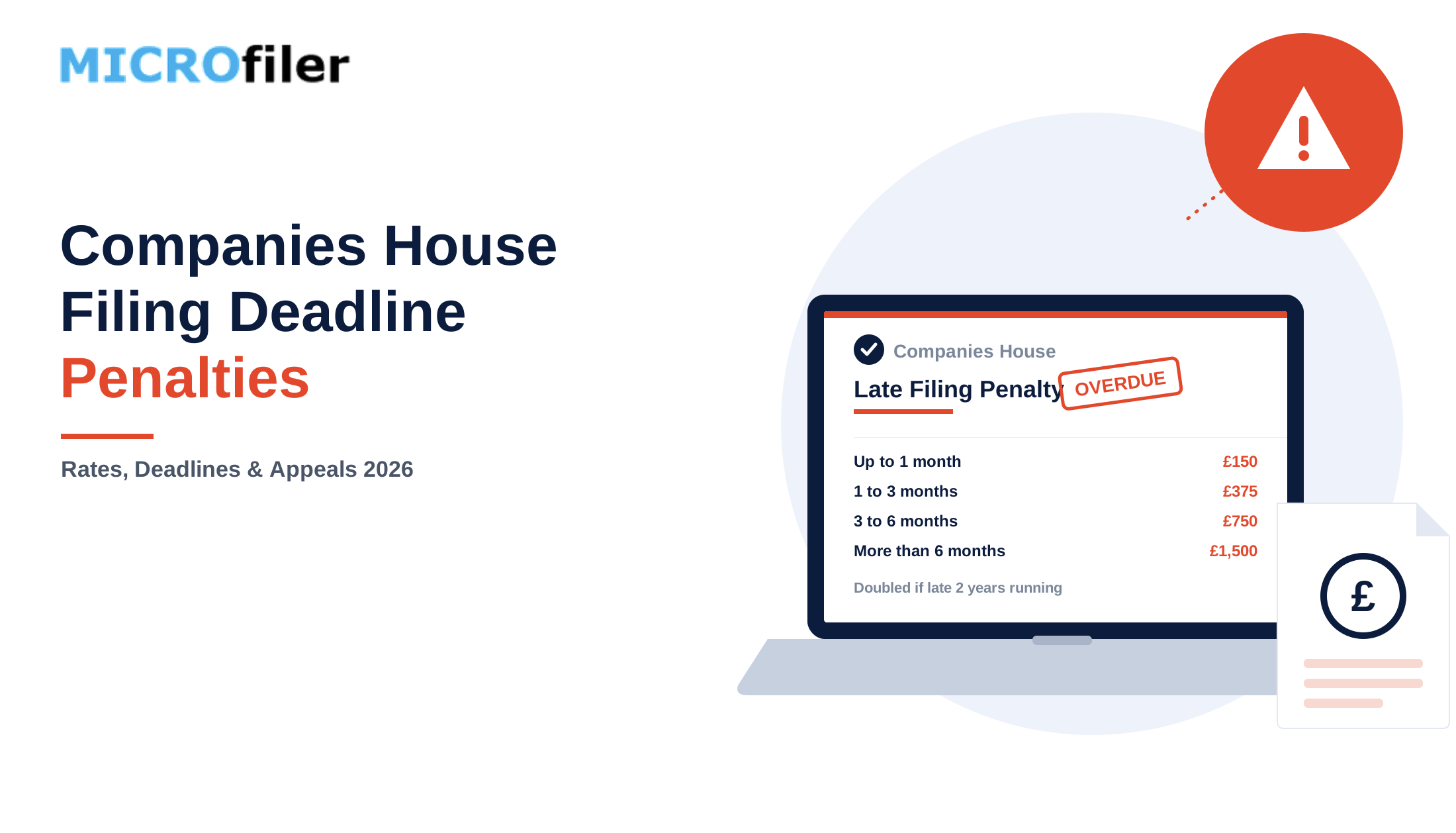
How Late Penalty Amount
Up to 1 month £150
1-3 months £375
3-6 months £750
6+ months £1,500

Important Points:

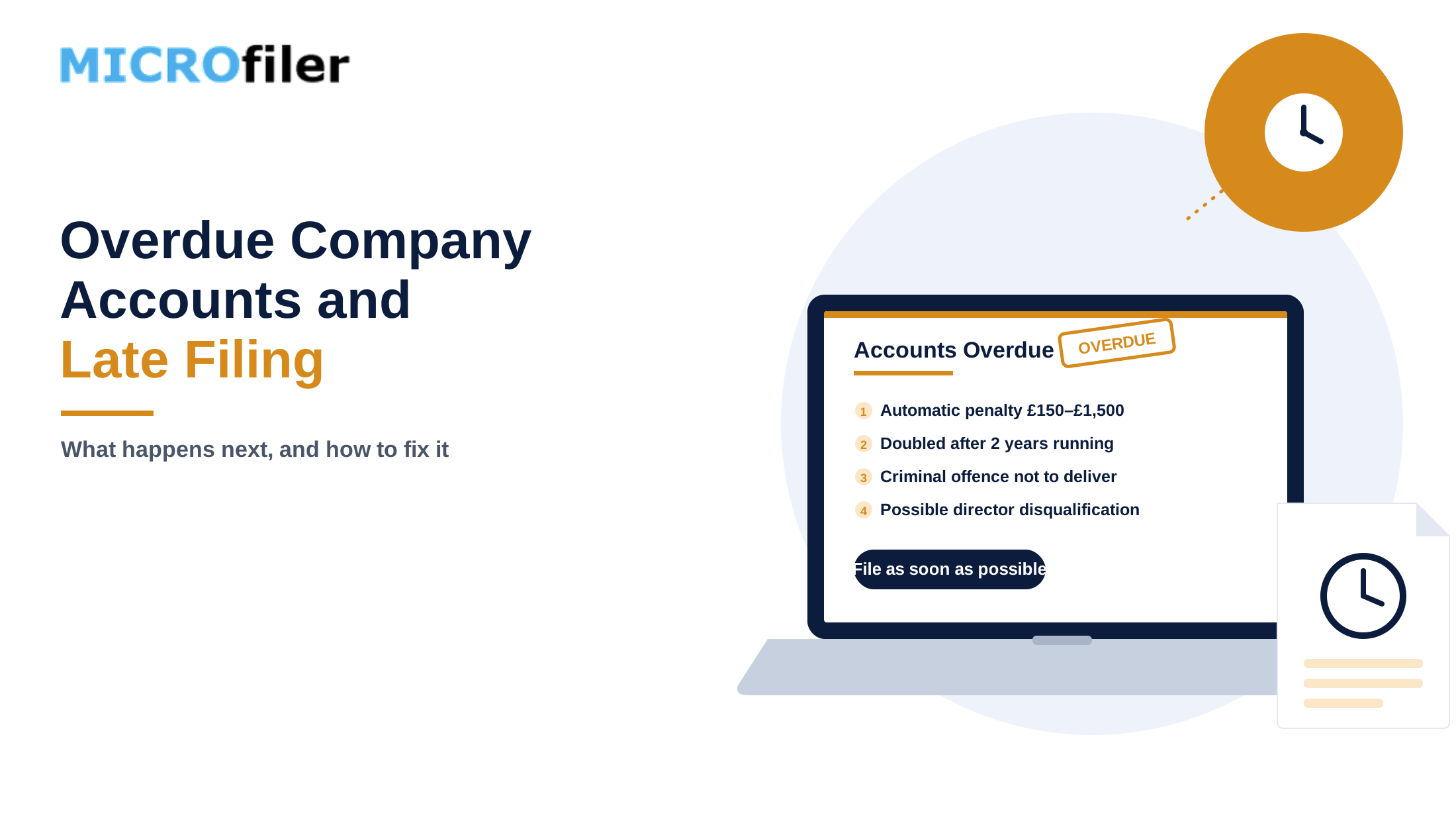
  • Penalties double if you file late in two consecutive years
  • Penalties apply regardless of company size
  • Directors can be personally liable for persistent late filing
  • Companies House may strike off your company for continued non-compliance


How to Avoid Late Filing

  • Know your deadline: 9 months from financial year-end
  • Prepare early: Start accounts preparation 2-3 months before deadline
  • Use software: Accounting software reduces preparation time
  • Set reminders: Mark filing date on calendar several months ahead

Consider extensions: File for accounting period extension if needed (but only once every 5 years without valid reason)


The Future of Micro-Entity Reporting

What’s Likely to Change

While the April 2027 ECCTA 2027 reforms have been delayed, the fundamental direction of policy remains:


Increased Transparency:

  • Government aims to reduce economic crime through better data
  • Profit and loss filing for micro-entities is likely eventually
  • Enhanced director statements may still come


Digital Modernisation:

  • Software-only filing will likely become mandatory
  • WebFiling services may be reduced or discontinued
  • iXBRL tagging will remain standard


Threshold Adjustments:

  • Monetary thresholds may increase again with inflation
  • Employee thresholds typically remain stable
  • Regular reviews ensure thresholds stay relevant


What’s Unlikely to Change

Core Simplification:

  • Micro-entity status will remain the simplest option
  • FRS 105 will continue as the standard
  • Directors’ report will likely remain optional for micro-entities


Audit Exemption:

  • Automatic exemption for micro-entities will persist
  • The £10.2 million revenue threshold won’t change significantly
  • Simplified exemption statements will remain
  • Summary Checklist for Micro-Entities (2025/26 and 2026/27)


For Each Financial Year

  • Confirm micro-entity status (2 of 3 thresholds met)
  • Prepare balance sheet using FRS 105 format
  • Calculate profit or loss for the year
  • Include audit exemption statement (signed by directors)
  • File within 9 months of year-end
  • Pay any late filing penalties if applicable
  • Monitor for reform updates from Companies House


Annual Review Questions

  • Did turnover exceed £1,000,000?
  • Did balance sheet exceed £500,000?
  • Do you have more than 10 employees?
  • Have you exceeded limits for 2 consecutive years?
  • Do you need to reclassify as small company?


Final Thoughts

Micro-entity accounts offer the simplest route for UK companies to meet their statutory filing obligations. With the updated thresholds from April 2025, more businesses can qualify for this streamlined approach, reducing both costs and administrative burden.


While significant changes were planned under ECCTA 2023, the government has delayed implementation, meaning current rules remain stable through 2026/27. This gives micro-entities certainty and time to prepare for any future reforms.


The key is to stay informed about official announcements, maintain good record-keeping practices, and file accounts promptly to avoid penalties. With proper preparation, micro-entity status can significantly simplify your company’s compliance requirements.


Disclaimer: This guide provides general information about micro-entity accounts for 2025/26 and 2026/27. Accounting regulations and filing requirements may change. Always verify current rules with official Companies House guidance at gov.uk or consult a qualified accountant for advice specific to your business situation. The delayed ECCTA 2023 reforms may be announced at a later date, so monitor official sources for updates.
How to File a CT600
by PH966616 3 August 2026
How to File a CT600 Company Tax Return A CT600 is HM Revenue and Customs' Company Tax Return, the form every UK company or association uses to report its income, gains, reliefs, and Corporation Tax bill for an accounting period. It matters because filing it isn't optional: once a UK company starts trading, earning income, or otherwise operating, HMRC expects a Corporation Tax registration and, in due course, a CT600 for every accounting period, whether the company made money or not. Skip it, and HMRC charges automatic penalties from the day after the deadline, regardless of whether any tax is actually owed . Filing a CT600 means preparing three things together, the CT600 form itself, your statutory accounts, and a tax computation, then submitting them through HMRC-recognised software or a chartered accountant. This guide walks through who's actually required to file, what you need to gather before you start, the filing steps themselves, and the deadlines and penalties that come with getting it wrong. HMRC closed its free Company Accounts and Tax Online filing service on 31 March 2026. From 1 April 2026, you can no longer file a CT600 through HMRC's own website. You now need commercial software or an accountant who files on your behalf. Key takeaways Filing is triggered by HMRC's "notice to deliver a Company Tax Return," issued automatically to active companies; clubs and associations can owe one too. Sole traders and partnerships file Self Assessment instead. Gather your UTR, company details, and finalised accounts before opening any filing software. A CT600 filing is three documents submitted together: the CT600 form, iXBRL accounts, and an iXBRL tax computation. New companies often file two CT600s in their first year, since the first accounting period usually exceeds 12 months. The filing deadline is 12 months after the accounting period ends; payment is due earlier, at 9 months and 1 day. You can amend a return within 12 months of the filing deadline. Who Needs to File a CT600? Your company or association must file a Company Tax Return once HMRC sends a "notice to deliver a Company Tax Return." You still have to file if you make a loss or have no Corporation Tax to pay. HMRC issues this notice automatically to companies it believes are active, so in practice any trading UK limited company files one every accounting period. Two groups often assume they're exempt and aren't: Dormant companies that later receive a notice. Once HMRC issues that notice, you must file, even for a period with no activity at all. Clubs, societies, and other unincorporated associations. A sports club or voluntary group can owe Corporation Tax and a Company Tax Return too, even though it isn't a limited company. GOV.UK covers registration for these differently from standard limited companies. One group that doesn't file a CT600 at all: sole traders and partnerships. They report profits through Self Assessment instead, not a Company Tax Return. If HMRC has confirmed your company is dormant and hasn't issued a notice, you don't need to file. That confirmation is the trigger, not your own assumption that nothing happened. What Documents and Information Do You Need? Gather these before you open any filing software: Your Corporation Tax UTR. The 10-digit Unique Taxpayer Reference HMRC posted to your registered office when the company was set up for Corporation Tax. Company details. Registered name and Companies House number. Your accounting period dates. Normally the same 12 months as your company's financial year. Finalised year-end figures. Turnover, expenses, and profit, plus anything that needs adjusting for tax, such as depreciation, client entertainment, and capital purchases. Government Gateway credentials. Needed to access your business tax account, even when filing through commercial software. Filing software or an accountant. HMRC-recognised software that produces the CT600, computation, and iXBRL accounts, or an accountant who files on your behalf. What's Included in a CT600 Filing? A Company Tax Return is three documents, filed together, not one. The CT600 form. Company details, the accounting period, profits, reliefs, and the Corporation Tax calculation. Statutory accounts in iXBRL format. Your company's year-end accounts, tagged so HMRC's systems can read them automatically. A Corporation Tax computation. The working that turns your accounting profit into taxable profit, also filed in iXBRL. Some returns also need supplementary pages. CT600A covers director's loans, for example. Most micro-entities and small companies file the core CT600 with no supplementary pages at all. Filing with HMRC is separate from filing with Companies House. You still send annual accounts to Companies House, usually within 9 months of your accounting reference date, even though HMRC receives a version of those accounts alongside your CT600. GOV.UK sets out what a Company Tax Return must include in full. How Do You File a CT600 Step by Step? Step 1: Confirm your accounting period Your Corporation Tax accounting period normally matches your financial year and can't exceed 12 months. If your first accounts cover more than that, see filing your first return below. Step 2: Prepare your statutory accounts and tax computation Most small companies prepare accounts under FRS 105 (micro-entities) or FRS 102 Section 1A (small companies). Build the computation by starting from accounting profit, adding back disallowable costs like depreciation and entertainment, deducting capital allowances, and applying any losses to reach taxable profit. Step 3: Complete the CT600 form Enter company details, accounting period dates, and the figures from your computation. Check that the accounting period on the CT600 matches your company's actual trading period, not just the statutory accounts period. Mismatched dates are one of the most common reasons a return gets queried. Step 4: Submit online through commercial software File the CT600, accounts, and computation together through HMRC-recognised software, or through an accountant using their own professional software. Paper filing still exists, but only with a reasonable excuse for not filing online, or when filing in Welsh with form WT1 attached. Step 5: Pay any Corporation Tax due Filing the return and paying the tax are separate actions with separate deadlines, and payment comes first. Pay through your business tax account using your UTR followed by "A" and the accounting period end date, for example 1234567890A260331. A simple worked example: a company with £68,000 accounting profit, £4,000 added back for depreciation, and £6,000 deducted in capital allowances arrives at £66,000 taxable profit. That sits between £50,000 and £250,000, so marginal relief tapers the rate down from the 25% main rate to an effective rate in the low 20s rather than the full 19% or 25%. Filing Your First Corporation Tax Return New companies often hit one quirk. Your first accounts from Companies House usually cover more than 12 months, from incorporation to the end of the month a year later. A Corporation Tax accounting period can't exceed 12 months, so your first year typically needs two CT600s : one for the first 12 months of trading, and one for the remaining days up to your accounts date. Each is due 12 months after the end of the period it covers. After that first year, your accounting period and financial year normally line up, and you file one return per year. GOV.UK When Is the CT600 Filing Deadline? The CT600 is due 12 months after the end of your accounting period . A company with a year end of 31 March 2026 must file by 31 March 2027. Corporation Tax itself is due earlier, 9 months and 1 day after the period end . The same company would pay by 1 January 2027, three months before the return is even due. Most companies calculate their tax bill and pay it before they get around to filing the CT600 that confirms the figure. Companies with taxable profits above £1.5 million pay in quarterly instalments instead of a single lump sum. Current Corporation Tax rates are 19% on profits up to £50,000 and 25% above £250,000, with marginal relief tapering the rate for profits in between. GOV.UK publishes the current rates and thresholds if these change after this guide was last reviewed. What Happens if You File a CT600 Late? HMRC's penalties start the day after the deadline and apply whether or not you owe any tax. 1 day late: £200 3 months late: another £200 on top 6 months late: HMRC estimates your bill and adds a further 10% of the unpaid tax 12 months late: another 10% of unpaid tax on top of that  File late three times in a row and the fixed £200 penalties rise to £1,000 each time. If you're six months late, HMRC issues a "tax determination," its own estimate of what you owe, and you can't appeal it. You still have to pay the determined amount and file the return; HMRC recalculates the interest and penalties once it has the real figures. GOV.UK's penalty guidance has the full detail, including how to appeal if you have a reasonable excuse. Do Dormant Companies Need to File a CT600? Usually not, but the exceptions catch people out. A company genuinely dormant for Corporation Tax, meaning no trading and no income of any kind, including bank interest, doesn't need to file once HMRC has agreed it's dormant. You tell HMRC through your business tax account. If HMRC has already sent a notice to deliver a Company Tax Return, you must file even if the company did nothing that period. That return is a normal CT600 with every figure at zero, known as a nil return. There's no separate nil-return form. GOV.UK explains dormant company rules in more depth. Dormant for Corporation Tax and dormant for Companies House are two different tests. A company can meet one and not the other, so check both separately rather than assuming. Can You Amend a CT600 After Filing? Yes. You can amend a Company Tax Return within 12 months of the filing deadline, usually by resubmitting the corrected return through your filing software. If you spot an error after that window closes, contact HMRC directly. Overpaid tax can often still be reclaimed through an overpayment relief claim even once the amendment window has passed. GOV.UK confirms the 12-month window and what HMRC can do if it disagrees with your figures. Can You File a CT600 for Free? Not through HMRC anymore. Its free filing service closed on 31 March 2026. Some commercial software providers still offer free or low-cost filing for straightforward dormant or nil returns, but a trading company with real figures to compute is better served by paid software or an accountant who can check the numbers before they reach HMRC. Common CT600 Questions Do I need an accountant to file a CT600? No. A director can file the company's own CT600 using HMRC-recognised software, provided the company's affairs are straightforward. Complex situations, such as R&D claims, group relief, or significant capital transactions, are worth professional review before filing. How long does filing a CT600 take? With finalised year-end figures, a straightforward small-company CT600 can be prepared and filed in well under an hour using guided software. Most of the work is having accurate accounts ready first. What's the payment reference for Corporation Tax? Your 10-digit UTR followed by "A" and the accounting period end date in YYMMDD format. Does a loss-making company still need to file? Yes. File on time even at a loss. Reported losses can be carried forward against future profits, but only if HMRC has a record of them. Do I still need to file accounts with Companies House? Yes. The CT600 and iXBRL accounts go to HMRC. Statutory accounts are filed separately with Companies House, normally 9 months after the financial year ends. GOV.UK covers first accounts and returns for new companies specifically. This guide is based on official guidance from GOV.UK , Companies House, and HMRC. Always verify current requirements before filing.
22 July 2026
If you run a very small UK limited company, micro-entity accounts could be the simplest and most appropriate filing option available. This guide walks you through everything you need to know about qualifying for micro-entity status, preparing your accounts under FRS 105, and filing them correctly with both Companies House and HMRC. What Are Micro-Entity Accounts? Micro-entity accounts are the simplest statutory accounts available for UK limited companies. Under the micro-entities regime (FRS 105), you can file only a balance sheet with Companies House—no profit and loss account is required publicly. Eligibility: Do You Qualify as a Micro-Entity? Your company qualifies as a micro-entity if it meets at least 2 of these 3 criteria for two consecutive years: Criterion/Thre shold Turnover: £1 million or less Balance sheet total: £500,000 or less Employees: 10 or fewer (averaged) Important threshold update: For periods starting on or after 6 April 2025, the government increased thresholds from the previous £632,000 turnover and £316,000 balance sheet limits. Your company cannot qualify if it's: A public company A charity An investment company A financial institution (insurance, banking, etc.) Part of an ineligible group What Micro-Entity Accounts Must Include Under FRS 105, micro-entity accounts filed with Companies House contain only: Cover page with company name and registration number Simplified balance sheet (signed by a director) Four mandatory footnotes to the balance sheet: Number of employees Called-up share capital not paid Off-balance sheet arrangements (if any) Statement that accounts are prepared under the micro-entities regime You are exempt from filing: Profit and loss account (not publicly disclosed) Director's report Auditor's report (micro-entity accounts are audit-exempt) What You Still Must Submit to HMRC While Companies House only sees your balance sheet, HMRC receives full financial information through your CT600 Company Tax Return: Destination / What's Filed Companies House: Balance sheet only (abbreviated accounts) HMRC: Same balance sheet + CT600 form with turnover, expenses, and taxable profit HMRC accepts iXBRL accounts with just the balance sheet because the CT600 form provides all profit and income figures needed for tax calculation. Step-by-Step: How to File Micro-Entity Accounts Before You Start You'll need: Email address and password for Companies House WebFiling Authentication code (posted to your registered office—allow up to 5 days) Filing Through Companies House WebFiling Log in to the WebFiling service and authenticate Select "File accounts" from your company profile page Choose "Micro-entity accounts" option Confirm eligibility —verify you meet at least 2 of 3 criteria Enter balance sheet figures from your prepared accounts Fill required fields including "called-up share capital not paid" (also enter in capital and reserves) Leave non-applicable fields blank Add footnotes via "Do you want to provide any footnotes to the balance sheet?" Enter employee count Validate and continue to review Sign and date the accounts (director's name must be printed) Submit your accounts —you'll receive a submission number Receive confirmation emails acknowledging receipt and acceptance/rejection Filing With HMRC Micro-entity accounts are submitted to HMRC automatically when you file your CT600 : Use commercial software that files both CT600 and accounts together (recommended) The same iXBRL balance sheet is attached to your CT600 No separate upload to HMRC is needed Filing Deadlines Obligation / Deadline Companies House: 9 months after accounting period end HMRC (CT600): 12 months after accounting period end Example: If your accounting period ends 31 January 2025, you must file with Companies House by 31 October 2025. Important Changes Coming in 2028 From April 2028 , new legislation will change micro-entity filing: Micro-entities must file profit and loss accounts with Companies House However, you can opt out of publishing the P&L on the public register Small companies cannot file "abridged" accounts under new rules You have 21 months to prepare (until April 2028). Common Mistakes to Avoid ❌ Filing only to HMRC without Companies House—both require accounts ❌ Missing director signature on balance sheet ❌ Not including all 4 footnotes ❌ Filing late —penalties start at £150 and increase ❌ Using old thresholds —remember the April 2025 increase to £1m/£500k When Micro-Entity Accounts Aren't Right Consider alternative accounting standards if: You need to show creditors more detailed financial information Your group requires FRS 102 for consolidation You want to voluntarily disclose profit and loss publicly Your company will exceed micro-entity thresholds next year Summary Micro-entity accounts offer the simplest filing path for qualifying small companies: File only a balance sheet publicly with Companies House Submit full financial data to HMRC via CT600 Meet 2 of 3 criteria : £1m turnover, £500k balance sheet, 10 employees File within 9 months of your accounting period end Prepare for 2028 changes when P&L filing becomes mandatory For most qualifying companies, micro-entity accounts under FRS 105 provide maximum simplicity with minimum public disclosure—until the 2028 reforms take effect. This guide is based on official guidance from GOV.UK , Companies House, and HMRC. Always verify current requirements before filing.