Do I Need an Accountant for a Limited Company?
No, you do not legally need to appoint an accountant for your UK limited company. You can prepare and file your company's accounts and manage its tax responsibilities yourself, provided you meet the relevant requirements and deadlines.
However, not having an accountant does not remove your company's accounting and tax responsibilities. As a company director, you remain responsible for keeping proper records, preparing annual accounts, dealing with Corporation Tax and making the required filings. You can appoint an accountant to help with these tasks, but the legal responsibility remains with the directors.
For a small company with straightforward finances, managing the accounts yourself may be practical. As your company's finances become more complicated, professional accounting support can reduce the administrative workload and provide help with accounting and tax matters.
Do Limited Companies Legally Need an Accountant?
There is no general requirement for a UK private limited company to appoint an accountant.
Companies can manage their own accounting and filing responsibilities. You can prepare your company's accounts yourself or appoint an accountant or another professional to do the work for you.
The important point is that not having an accountant does not remove the company's legal responsibilities.
As a director, you are responsible for making sure your company:
- Keeps appropriate company and accounting records
- Prepares its annual accounts
- Files its accounts with Companies House
- Completes its Company Tax Return when required
- Pays Corporation Tax
- Keeps required company information up to date
- Meets the relevant filing deadlines
You can ask an accountant to handle these tasks, but you remain legally responsible for your company's records, accounts and performance.
What Does a Limited Company Have to Do Each Year?
The exact requirements depend on the company's circumstances, but a private limited company generally has several important accounting and tax responsibilities.
Prepare Annual Accounts
After the end of its financial year, a private limited company must prepare annual accounts. The type of accounts and reporting requirements can depend on the company's size and circumstances.
For example, qualifying micro entities may be able to use simpler reporting requirements.
If you want to understand the reporting requirements for smaller companies, see our guide to micro entity accounts.
File Accounts With Companies House
The company must file its annual accounts with Companies House by the applicable deadline.
For most private companies, annual accounts are due nine months after the end of the company's financial year. First accounts have different rules and are generally due 21 months after incorporation.
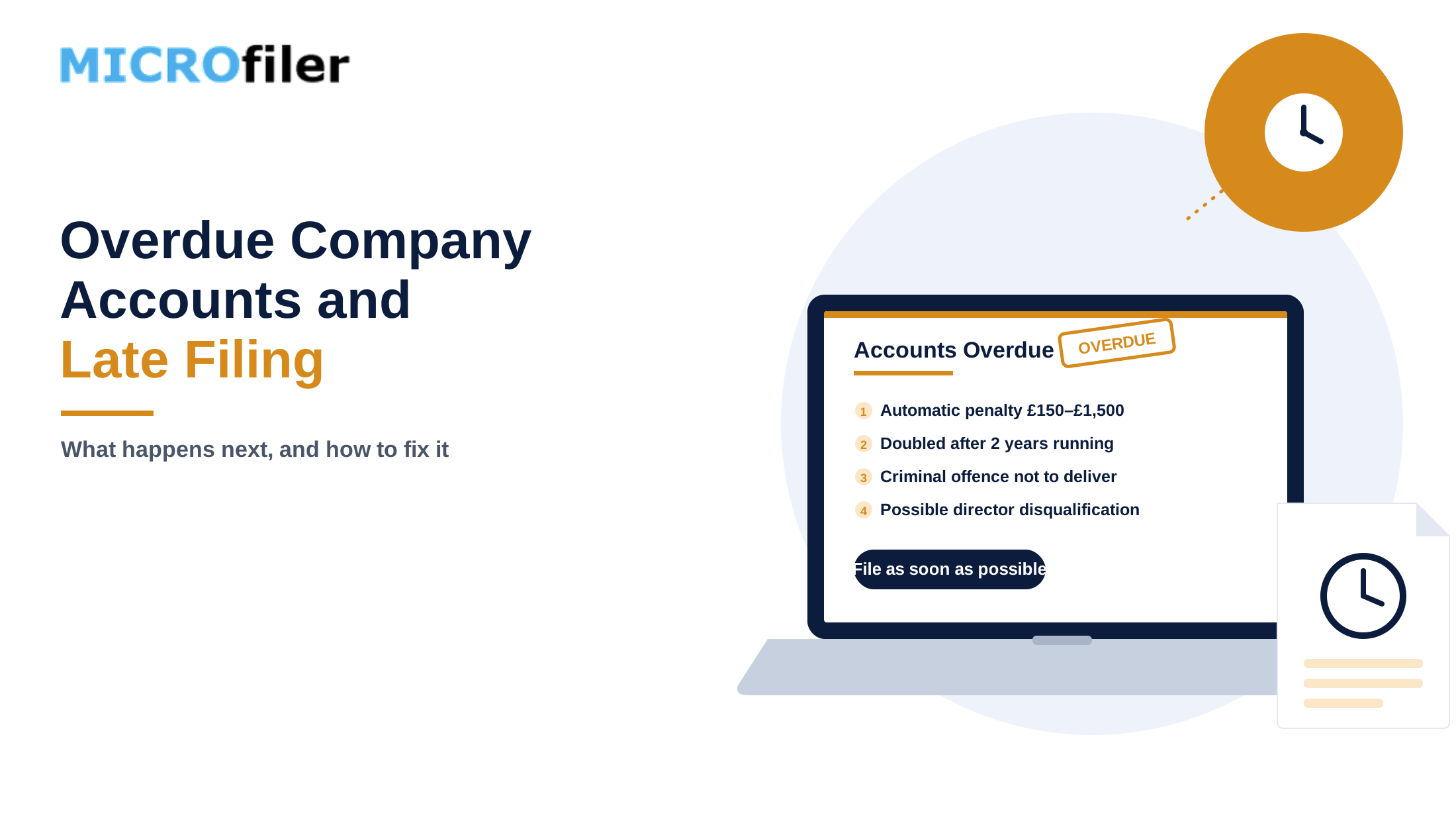
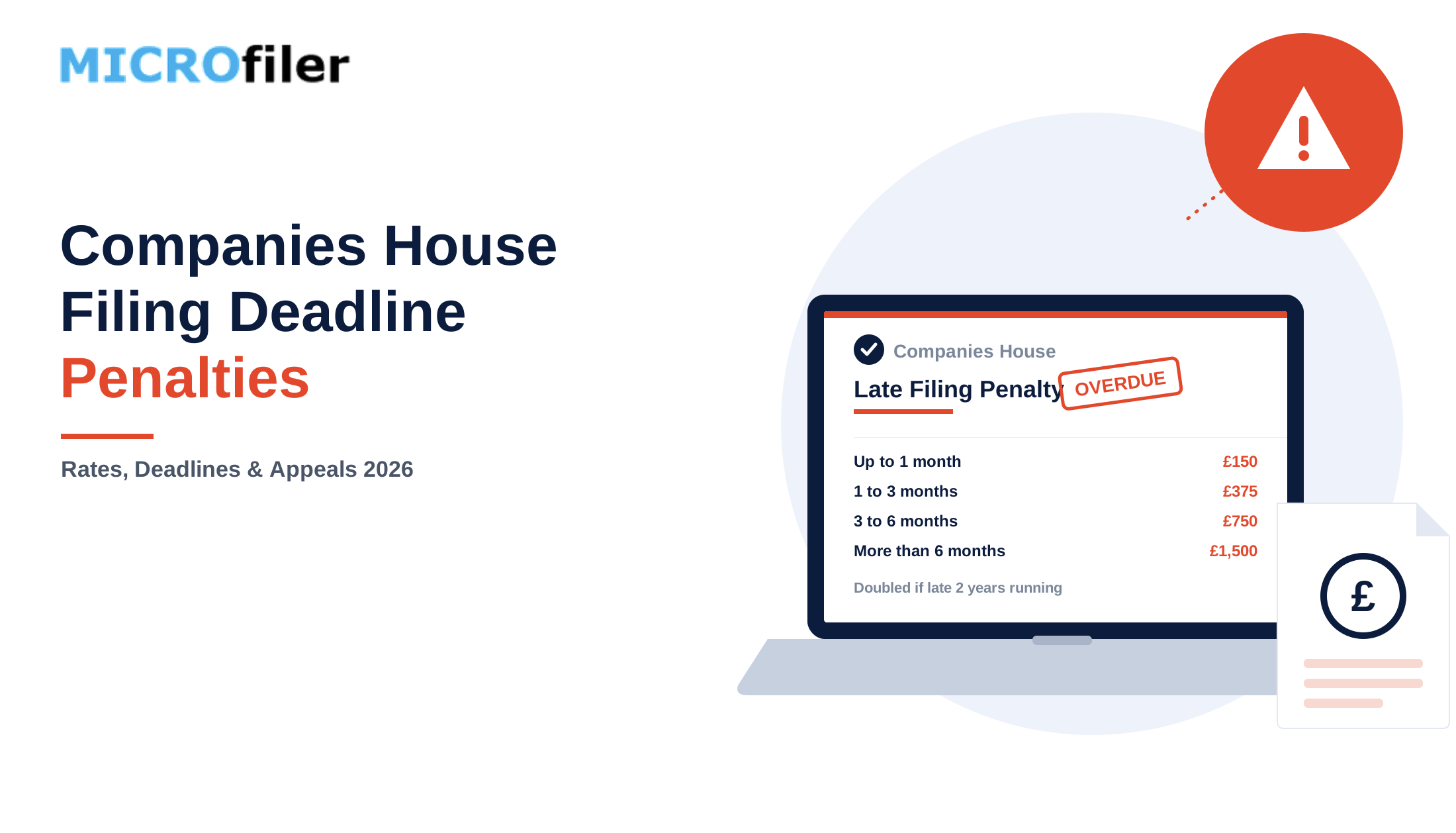
Missing the deadline can result in a late filing penalty. You can learn more about this in our guide to overdue company accounts and late filing.
Complete a Company Tax Return
A limited company may need to file a Company Tax Return with HMRC.
The Company Tax Return is separate from the annual accounts filed with Companies House. For a standard accounting period, the Company Tax Return is generally due 12 months after the end of the Corporation Tax accounting period.
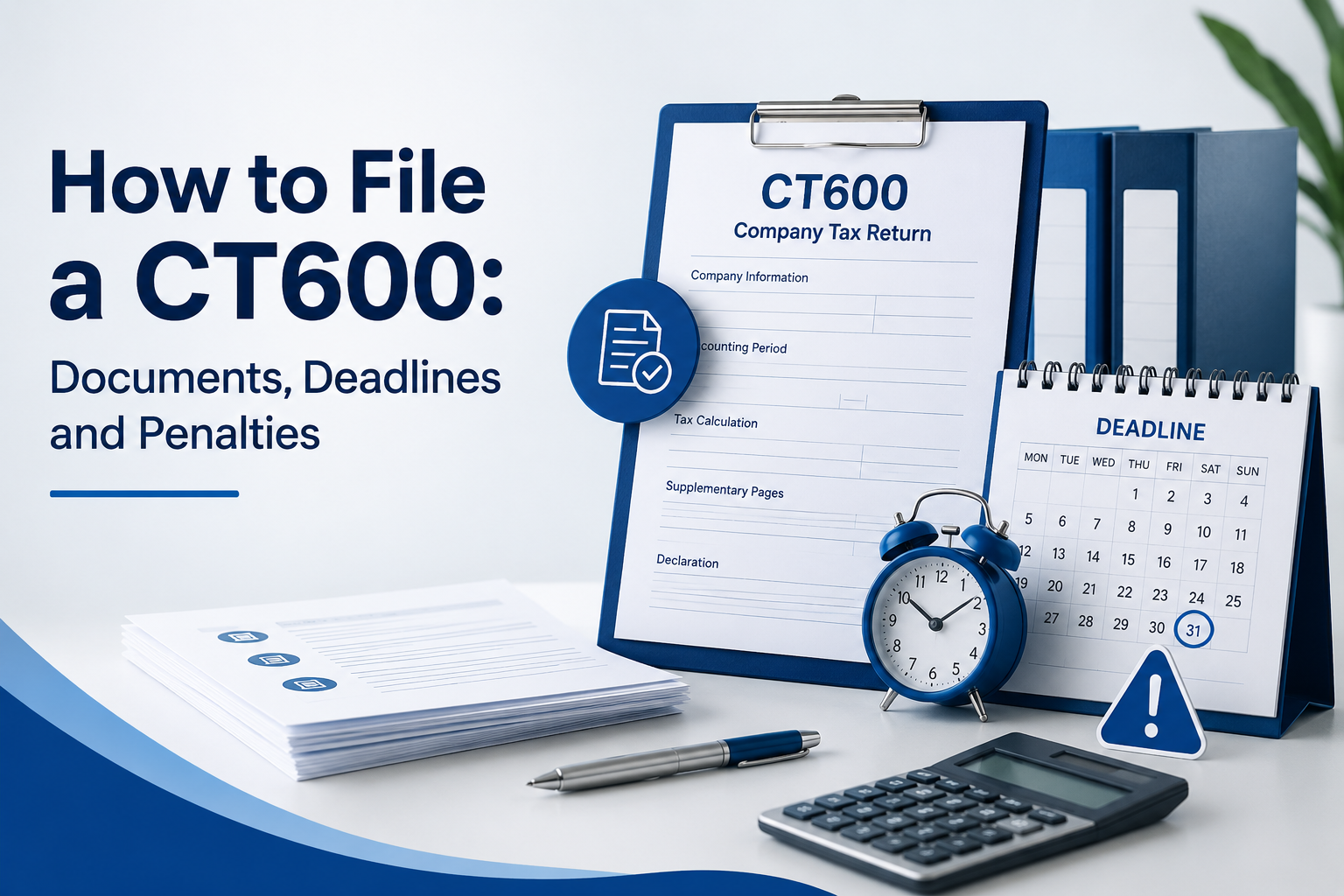
If you are managing the process yourself, our guide explains how to file a CT600 Company Tax Return.
Pay Corporation Tax
If your company owes Corporation Tax, it must pay the tax by the relevant deadline.
For most companies, Corporation Tax is due nine months and one day after the end of the accounting period for Corporation Tax. This is separate from the deadline for filing the Company Tax Return.
Keep Proper Accounting Records
Limited companies need to keep appropriate company and accounting records.
These records provide the financial information needed to prepare the company's accounts and deal with its tax responsibilities.
Good record keeping can also make it easier to identify errors, understand the company's financial position and prepare information for an accountant if you later decide to use one.
Can I Do My Own Limited Company Accounts?
Yes. A director can manage the company's accounts without appointing an accountant.
However, doing your own accounts means taking responsibility for understanding and completing the relevant accounting and filing work.
Depending on your company, this may involve:
- Recording income and expenses
- Keeping supporting financial records
- Reconciling business transactions
- Preparing annual accounts
- Calculating the company's taxable profit
- Preparing the Company Tax Return
- Filing the required information with Companies House and HMRC
- Paying Corporation Tax by the relevant deadline
- Keeping accounting records for the required period
- Correcting errors when necessary
For a company with straightforward finances and relatively few transactions, this may be manageable.
The situation can become more complicated when the company has employees, VAT obligations, multiple directors, significant expenses, loans or other financial transactions.
The important question is therefore not simply whether you can do your own accounts. It is whether you have the knowledge, time and systems to manage them accurately.
What Does an Accountant Do for a Limited Company?
An accountant can handle many of the accounting and tax tasks that would otherwise need to be managed by the company's directors.
The exact service depends on the accountant, but support can include the following.
Bookkeeping and Financial Records
An accountant can help maintain or review your company's financial records.
This may include recording transactions, reconciling accounts, reviewing expenses and organising information for accounts and tax returns.
Annual Company Accounts
An accountant can prepare the company's annual accounts from its accounting records.
This can be useful when you are unfamiliar with the reporting requirements that apply to your company.
For example, a company that qualifies as a micro entity may have different reporting requirements from a larger company.
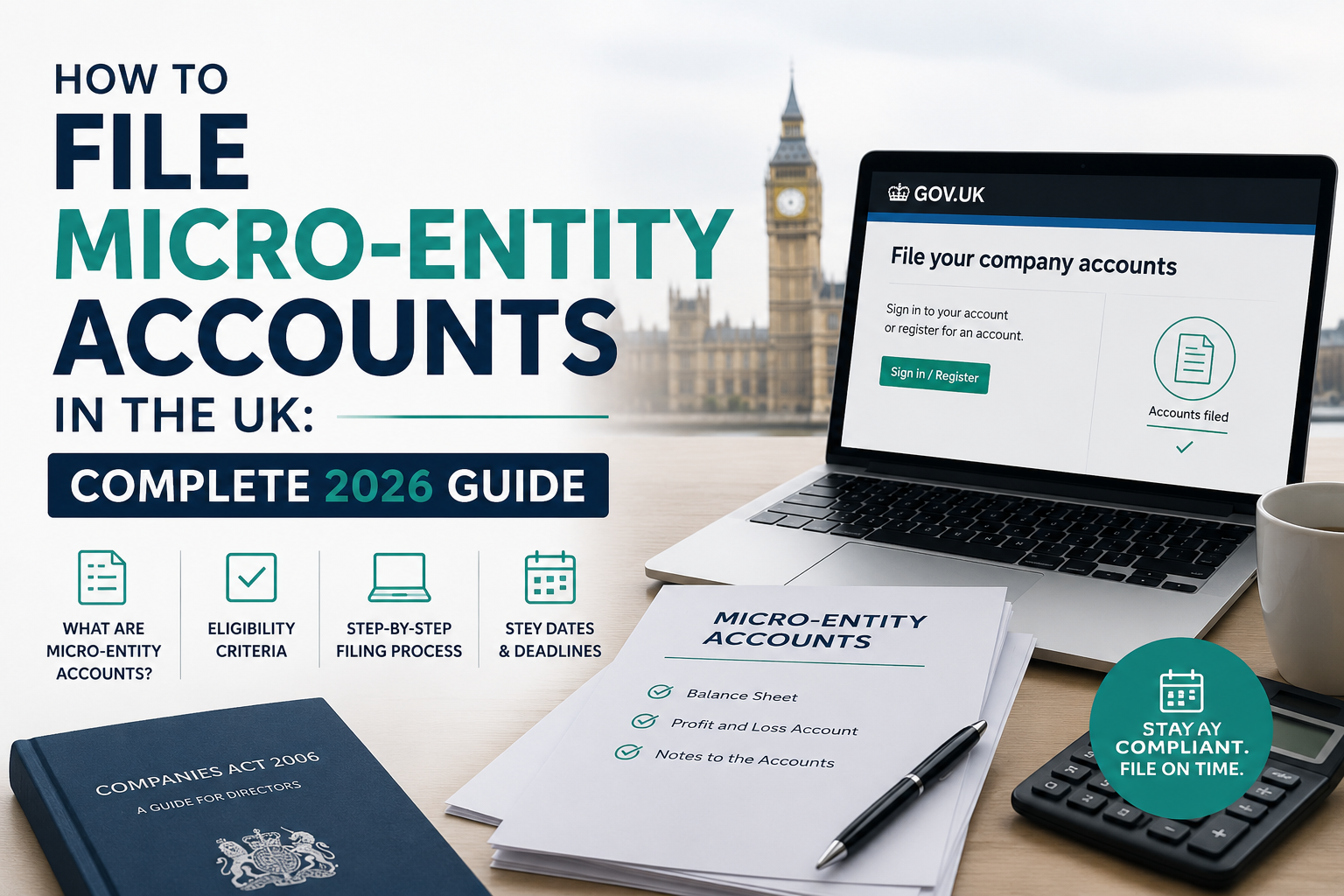
If you want to understand the practical filing process, see our guide to how to file micro entity accounts in the UK.
Corporation Tax and Company Tax Returns
An accountant can prepare the calculations needed for the company's Corporation Tax position and help complete its Company Tax Return.
This can reduce the amount of technical accounting work the director has to manage.
Companies House Filing
An accountant can also file company accounts on your behalf.
However, appointing an accountant does not transfer the director's legal responsibility for the company's records, accounts and performance.
VAT and Payroll
Depending on the service, an accountant may also manage VAT returns, payroll and related reporting.
These services can become particularly useful when a company has employees or is registered for VAT.
Tax and Accounting Advice
An accountant can provide advice beyond preparing accounts and filing returns.
Depending on the company's circumstances, this may include guidance on business expenses, Corporation Tax, dividends, director transactions, VAT and other accounting matters.
When Should You Hire an Accountant?
There is no single point at which every limited company needs an accountant.
The decision generally depends on the complexity of the business, your accounting knowledge and the amount of time you want to spend managing financial administration.
Your Company Has Simple Finances
Managing your own accounts may be practical if your company has:
- A small number of transactions
- Straightforward income and expenses
- No employees
- Simple ownership
- No complicated financial arrangements
- A director who understands the relevant accounting requirements
You still need to maintain appropriate records and meet the applicable filing deadlines.
Your Company Has Employees
Having employees introduces additional payroll and reporting responsibilities.
You may need to deal with PAYE, National Insurance, payroll records and related submissions to HMRC.
An accountant or payroll specialist can manage these processes if you do not want to handle them yourself.
Your Company Is VAT Registered
VAT adds another layer of accounting and reporting.
You need to maintain appropriate VAT records, calculate VAT correctly and submit VAT returns by the relevant deadlines.
If VAT is making your accounting more difficult to manage, professional support may be useful.
Your Business Is Growing
A company that starts with a few monthly transactions can become considerably more complicated as it grows.
You may eventually have:
- More customers
- More suppliers
- Employees
- Contractors
- VAT
- Larger expenses
- Multiple directors
- More complicated transactions
- Additional tax considerations
At this stage, an accountant can take on accounting work and help you understand the financial information behind the business.
You Are Unsure About Your Tax or Filing Responsibilities
Professional support may also be useful if you regularly find yourself unsure about:
- Which expenses the company can claim
- Which accounts need to be filed
- How Corporation Tax is calculated
- Which filing deadline applies
- How to deal with director transactions
- Whether VAT registration is required
Understanding your filing obligations is particularly important because missing deadlines can result in penalties. See our guide to Companies House filing deadlines and penalties for more information.
Accountant vs DIY: Which Approach Fits Your Company?
Both approaches can work. The right choice depends on your company's circumstances and how comfortable you are managing the work.
- Professional fees — DIY accounting: Lower · Using an accountant: Higher
- Time required from director — DIY accounting: Higher · Using an accountant: Usually lower
- Accounting knowledge — DIY accounting: You need to develop it · Using an accountant: Professional expertise available
- Bookkeeping — DIY accounting: You manage it · Using an accountant: Can be outsourced
- Annual accounts — DIY accounting: You prepare and file them · Using an accountant: Accountant can prepare and file them
- Company Tax Return — DIY accounting: You manage it · Using an accountant: Accountant can prepare it
- Tax advice — DIY accounting: Based on your own knowledge · Using an accountant: Professional advice available
- Control — DIY accounting: Direct control over the process · Using an accountant: Accountant manages agreed tasks
- Suitable for — DIY accounting: Straightforward companies · Using an accountant: Companies needing additional support
Using an accountant is therefore not a legal requirement for most private limited companies. It is a practical decision based on the level of accounting support you need.
How Much Does an Accountant Cost for a Limited Company?
There is no single price for limited company accounting.
Fees can vary depending on:
- Company turnover
- Number of transactions
- Number of directors
- VAT registration
- Payroll requirements
- Complexity of the accounts
- Corporation Tax work
- Bookkeeping requirements
- Additional tax or advisory services
A company with a small number of straightforward transactions will generally need a different level of accounting support from a company with employees, VAT and more complex financial activity.
When comparing accounting services, look at what is included rather than comparing the headline price alone. Check whether the service covers annual accounts, Corporation Tax returns, bookkeeping, payroll, VAT and Companies House filing.
What Happens If You Do Not Use an Accountant?
Nothing automatically goes wrong because you do not have an accountant.
You can manage your company's accounting yourself if you understand the requirements and meet your responsibilities.
The important distinction is between not using an accountant and not managing your accounting responsibilities.
Without an accountant, you still need to:
- Keep appropriate accounting records
- Prepare the required accounts
- File accounts on time
- Complete required tax returns
- Pay Corporation Tax
- Keep company information up to date
- Maintain supporting records
- Deal with relevant HMRC and Companies House matters
Directors remain legally responsible even when an accountant is appointed.
Can Accounting Software Replace an Accountant?
Accounting software can make DIY accounting easier, but it does not necessarily replace professional accounting advice.
Software can help you:
- Record transactions
- Track income and expenses
- Reconcile transactions
- Organise financial information
- Produce financial reports
- Prepare information needed for accounts and tax returns
- Support certain electronic filings
However, software does not automatically understand the circumstances behind every transaction or determine the correct accounting treatment in every situation.
For example, software can record money transferred between a director and the company, but determining whether the transaction should be treated as an expense, director's loan, dividend or another type of transaction requires the underlying facts and appropriate accounting treatment.
This is where professional advice can still be useful.
A company can therefore use accounting software while also using an accountant for annual accounts, tax returns or occasional advice.
Do Micro Companies Need an Accountant?
A micro company does not generally have to appoint an accountant simply because it qualifies as a micro entity.
Qualifying micro entities can use simpler accounts and may qualify for certain reporting and audit exemptions, subject to the relevant conditions. However, they still have accounting and filing responsibilities.
This means a small company may be able to manage its own accounts, but the director should understand which requirements apply to the company.
For a straightforward company, DIY accounting may be manageable. For a company with more complicated transactions or a director who is not comfortable with accounting requirements, professional support may be useful even when the company is small.
Frequently Asked Questions
Is an accountant legally required for a limited company?
No. A UK private limited company does not generally have to appoint an accountant. Directors can manage the company's accounting and filing responsibilities themselves, but they remain responsible for meeting the relevant requirements.
Can I file my own limited company accounts?
Yes. You can prepare and file your company's accounts yourself if you meet the applicable requirements. You remain responsible for ensuring the accounts are accurate and filed by the relevant deadline.
Can a director prepare company accounts without an accountant?
Yes. There is no general requirement for an accountant to prepare a private limited company's accounts. However, the director needs to understand the accounting and filing requirements that apply to the company.
Do micro companies need an accountant?
Not simply because they are micro entities. A qualifying micro entity can use simplified reporting requirements, but it still has accounting and filing responsibilities.
Does hiring an accountant transfer responsibility from the director?
No. An accountant can handle accounting and filing work on behalf of the company, but the directors remain legally responsible for the company's records, accounts and performance.
Can accounting software replace an accountant?
Accounting software can handle many bookkeeping and accounting tasks, but it does not necessarily replace professional accounting advice. Whether you need an accountant depends on your company's complexity and your own accounting knowledge.
When should I hire an accountant for my limited company?
Consider professional accounting support when your company's finances become more complicated, accounting takes too much of your time, you have employees or VAT obligations, or you need advice beyond basic bookkeeping and filing.